
Why Do I Overthink Everything? The Emotional Reasons Your Mind Will Not Stop
Replaying conversations, doubting decisions or preparing for every possibility? Understand why you overthink and learn gentle ways to step out of the loop. I suggest you read this one with a cup of tea in your hand.
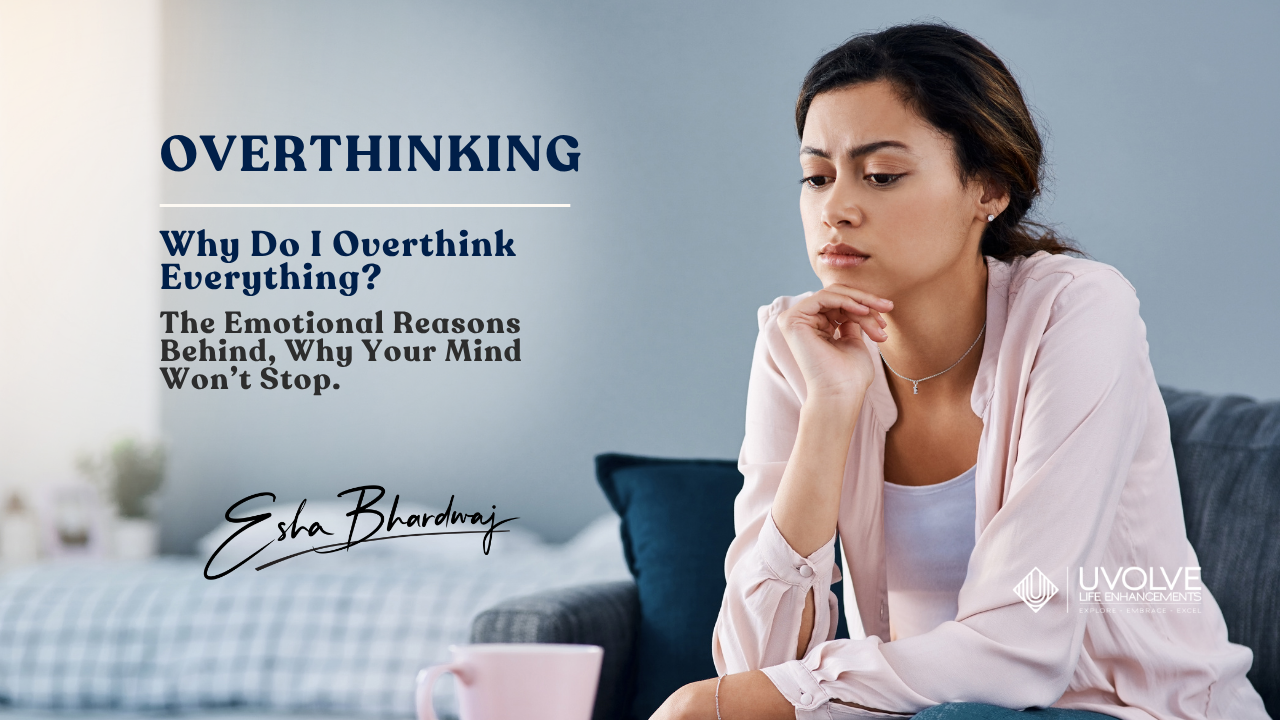
The conversation ended hours ago. You are still having it.
You have thought of a better answer. A softer way to say what you meant. Something you wish you had not said at all.
The other person seemed fine.
But what if they were only being polite?
You pick up your phone and read the messages again. For a moment, you feel better. Then you notice something else.
Their last reply was shorter than usual.
And there you go again.
Or perhaps your thoughts are about a decision. A work email. Money. Your health. Whether you are doing enough for your family or falling behind in your own life.
Sometimes, you cannot even enjoy something good without reviewing it afterwards.
You had a lovely evening. You laughed. You felt comfortable. Then, on the way home, you started wondering whether you talked too much.
The hardest part is how ordinary you look while all this is happening. You are making dinner, answering emails or sitting beside someone while your mind works through questions nobody else can hear.
You know you are tired.
So why do you keep thinking? And why does stopping feel so difficult?
Why do I overthink everything?
Overthinking can be an attempt to manage uncertainty, avoid mistakes or protect yourself from being hurt. Fear of disappointing people, guilt, rejection and the pressure to get everything right can give your mind something to keep checking.
Underneath the thoughts, there may be a question that feels important to answer:
Are we okay?
Have I made the wrong choice?
What can I do now so this does not go badly later?
There is no single explanation for everyone. But understanding what you hope the thinking will do can help you see why you keep returning to it.
What is overthinking?
Overthinking means repeatedly going over a worry, situation or decision without reaching a useful answer or next step.
Sometimes you look backwards:
Why did I say that? What should I have done differently?
Sometimes you look ahead:
What if it goes wrong? What if I cannot handle it?
Thinking things through can help you learn, prepare and make decisions. Overthinking continues after that useful work is done.
You review the same details, ask the same questions and finish another round feeling no clearer.
Why does overthinking feel like keeping yourself safe?
Perhaps part of you believes that if you think carefully enough, you can avoid being caught off guard.
If you notice someone becoming distant, you can do something before they leave.
If you imagine every possible problem, you will know how to respond.
If you choose exactly the right words, nobody will misunderstand you.
Your mind may be trying to protect you by keeping you prepared.
That helps explain why letting go can feel uncomfortable. You may worry that you are being careless, missing a warning or leaving yourself open to hurt.
But overthinking does not guarantee safety. You can imagine a hundred difficult outcomes and still meet something you did not expect.
Useful preparation gives you something you can use. You write down a question, make a plan or decide what to say.
Overthinking keeps asking you to prepare until nothing uncertain remains.
That is a difficult place to find rest, because life rarely gives us that much certainty.
The emotional reasons you may be overthinking
You may recognise several of these patterns. You do not need to fit every one.
You are afraid of disappointing people
You want to say no, but first you need to find a version that nobody could be upset by.
So you explain. Then you soften the explanation. Then you apologise again.
Afterwards, you wonder whether you should have said yes.
When someone else’s disappointment feels hard to bear, even a small choice can take up a lot of space in your mind.
You may be trying to have needs without ever inconveniencing anyone.
Sometimes a kind, reasonable decision will still disappoint another person. Their reaction is not always a sign that you need to change your answer.
You feel guilty when you choose yourself
You finally have time to rest, but you cannot quite settle.
There is a message you have not answered. Someone you could check on. Something useful you could be doing.
Even during a break, you are explaining to yourself why you deserve one.
Guilt can keep the thinking going because you want to know whether you have done something wrong.
Try asking:
Is there something I need to put right, or does this feel unfamiliar because I usually put myself last?
Give the question an honest answer. You do not have to reopen it every few minutes.
You have learned to watch other people’s moods
Perhaps you have been around someone whose reactions were hard to predict.
You noticed changes in their voice. You listened carefully to their silence. You tried to work out whether it was a good time to speak.
If this feels familiar, you may still find yourself searching for meaning in small changes.
Someone seems quieter, and you immediately wonder what you did.
This is one possible part of the picture. Overthinking alone does not tell you what caused it.
And if someone is currently frightening or mistreating you, you deserve support with that situation too. You should not have to think your way into feeling comfortable with being treated badly.
You are afraid of rejection
You sent the message because you wanted to connect.
Now you wish you had waited.
Was I too eager? Too honest? Did I say too much?
You read it again, trying to see yourself through the other person’s eyes.
When a relationship matters, waiting can feel uncomfortable. Your mind may fill the silence with explanations, especially ones you fear.
But a delayed reply does not tell you why someone has not answered.
You can spend an hour studying the message and still not have the information you need.
You feel you have to get everything right
An ordinary email takes half an hour.
You finish a task, then reopen it because there might be one more thing to fix.
Perhaps a mistake feels like it would say something about you. That you are careless. That you are not capable. That you should have known better.
With that much pressure attached, stopping can feel risky.
The task may be finished long before you feel ready to leave it alone.
You are afraid of choosing the wrong life
Some decisions feel bigger than the choice in front of you.
A job becomes a question about your whole future. Moving somewhere new becomes a worry about everything you might lose. Staying becomes a worry about everything you might miss.
You want to know which choice you will never regret.
So you compare, research and ask for opinions. Eventually, every option has a convincing argument against it.
Big decisions deserve thought. But there may not be an option that comes with no uncertainty, compromise or possibility of regret.
You can make a careful choice using what you know today. You cannot always know how your future self will feel.
You find it hard to trust your own judgement
You know which option you prefer.
Then you ask someone else. They disagree, and suddenly your own reasons seem less convincing.
You ask another person, hoping they will settle it. Instead, you now have three opinions to work through.
Other people’s views can be helpful. But if you need everyone to agree before you trust yourself, decisions can become harder.
You may need practice giving your own preferences a place alongside other people’s advice.
Why can’t I stop overthinking, even when I want to?
Overthinking can offer a brief feeling of control. You check, replay or analyse something, feel reassured for a moment, then notice another doubt.
You decide your message sounded fine.
Then you wonder whether you sent it at the wrong time.
You settle that question, then think of something you should have added.
The question changes, but you are still searching for the same feeling:
Now I can be sure.
Checking and asking for reassurance can become part of this loop. You reread the email, search for another answer or ask, “Are you sure you are not upset?”
The relief may be real, but short.
When doubt returns, you feel pulled to check again.
This does not mean asking for advice is wrong. Notice whether the answer helps you move forward or whether you soon need the same reassurance again.
Sometimes you are waiting for all discomfort to disappear before allowing yourself to stop.
But you can make a thoughtful decision and still feel unsure. You can handle a conversation kindly and still wonder how it landed.
Feeling unsettled does not always mean there is more to solve.
What can overthinking look like in everyday life?
Overthinking can be easy to miss because it sometimes looks like being careful, organised or considerate.
You might:
- Keep researching instead of making a decision.
- Put off starting because you have not found the perfect approach.
- Rehearse a conversation until you feel too exhausted to have it.
- Ask several people the same question.
- Struggle to enjoy time with someone because you are monitoring how you come across.
- Review a happy evening until you find something to feel awkward about.
- Spend so long planning a task that there is little time left to do it.
You may reach the end of the day feeling as though you have worked constantly, while wondering why so little is finished.
That can be frustrating. Much of your effort has happened inside your head.
Overthinking can also take you away from moments you wanted to enjoy. Someone is speaking, but you are still reviewing what you said five minutes ago.
Noticing that cost can help you recognise when thinking is no longer serving you.
How can I get out of the overthinking trap?
Start with one small change. You do not need to turn these suggestions into another thing you must do perfectly.
1. Notice when your thoughts start repeating
Ask yourself:
Am I learning anything new, or am I going over the same fear again?
If you are repeating yourself, name it gently.
I am replaying this because I am worried about how I came across.
There is no need to add, Why am I always like this?
You are noticing a habit. You do not need to punish yourself for having it.
2. Separate what happened from what you think it means
Try writing two short lines.
What happened: My friend has not replied.
What I think it means: They are upset with me.
Your explanation may feel convincing, but you do not yet know whether it is true.
You do not have to force yourself to believe everything is fine. You can say:
I do not know why they have not replied yet.
That leaves room for information you do not have.
3. Decide whether there is one useful action to take
Ask:
What does this situation need from me right now?
If you made a mistake, you could offer a clear apology.
If you are worried about a task, you could choose the first step.
If something is unclear, you could ask a question.
Once you have acted, notice whether more thinking would change what you do next.
You may have done what is needed even if you still feel uneasy.
4. Notice when you are checking for relief
Before rereading, searching or asking again, pause.
Do I need new information, or do I want the same answer to make me feel certain?
If nothing has changed, try delaying one extra check in a small, everyday situation.
Let the message stay sent. Let the decision stay made for a little while.
You may feel uncomfortable. Start with something manageable and give yourself time to practise.
5. Give worry a time instead of the whole day
Try setting aside 10 to 15 minutes to write down your worries and consider any practical next steps.
If the same worry appears outside that time, make a brief note and bring your attention back to what you were doing.
You might tell yourself:
I have made time to look at this. I do not need to keep working on it right now.
A thought returning does not mean you have failed.
6. Take a small step before you feel completely ready
If you have spent an hour thinking about a task, choose a part you can do in five minutes.
Write the first few sentences. Open the document. Make the appointment.
For an everyday decision, give yourself a reasonable amount of time to consider it, then choose using the information you have.
You can adjust some decisions later. They do not all need to carry the weight of your entire future.
7. Bring your attention back to where you are
Feel your feet against the floor. Notice the sounds in the room. Take a sip of water.
Then choose a simple activity. Fold a few clothes, water a plant or take a short walk.
You do not need to make your mind go blank before you begin.
If the thought returns, notice it and gently come back to the activity. You can return more than once.
What does stepping out of overthinking look like?
Imagine receiving an email from your manager:
“Can we speak tomorrow?”
Your mind immediately fills in the missing details.
I have done something wrong. They are unhappy with my work. I should check everything I sent this week.
Before you spend the evening searching for a mistake, pause.
The fact: Your manager wants to speak tomorrow.
The fear: You are in trouble.
The useful action: You could ask whether there is anything to prepare.
If there is nothing else you need to do, the next step is to return to your evening.
You may still feel nervous. You may still think about the email.
You can remind yourself:
I have checked what I need to prepare. I will know more tomorrow.
The aim is to stop giving every new doubt another round of investigation.
What if there really is something wrong?
Some worries point to real problems.
A bill may need attention. Your workload may be unreasonable. A relationship may need a difficult conversation. A health concern may need medical advice.
You deserve practical support for those situations.
Ask:
What action or help would make a difference here?
That might mean speaking to someone, getting professional advice, setting a boundary or breaking a problem into smaller steps.
Taking action and reducing repetitive thinking can happen together. You do not have to dismiss a real concern to step out of the loop around it.
Why do I overthink more at night?
At night, there may be fewer things competing for your attention. Questions that stayed in the background during the day can feel louder when you finally lie down.
Suddenly, your mind wants to review everything just as your body wants to rest.
Try writing down what needs attention tomorrow before getting into bed. Give yourself one clear next step where possible.
You do not have to solve tomorrow’s conversation tonight.
If overthinking regularly keeps you awake, that is a good reason to ask for support.
When should I reach out to an emotional wellness coach or therapist?
You do not need to wait until you are overwhelmed.
An emotional wellness coach may help you work on everyday habits, personal goals and following through on changes. Look for someone with clear training who is honest about what they can help with.
If overthinking feels persistent, causes significant distress or regularly affects your sleep, work or relationships, a qualified therapist is a more appropriate place to start. Coaching does not replace mental health care.
You can begin with a simple sentence:
“I spend a lot of time going over things, and I am finding it hard to stop.”
You do not need a perfect explanation.
Support can give you space to understand what keeps the pattern going and practise different responses over time. Building habits that last can take patience. You are allowed to have someone help you along the way.
What does progress look like?
Progress does not have to mean never overthinking again.
It might mean noticing the loop after ten minutes instead of losing an evening to it.
It might mean checking once less, making a small decision without asking several people, or starting something while you still feel unsure.
Some days will be harder than others. An old habit returning does not erase what you have learned.
Look for the moments when you respond differently, even a little.
Those moments count.
You are allowed to leave a question unanswered tonight
Perhaps there is something you have already thought about twenty times today.
Before you begin again, pause.
Is there anything useful left for me to do right now?
If there is, take one manageable step.
If there is not, you can leave the question open for now.
You can care about someone without analysing every word they send. You can take responsibility for a mistake without spending the whole evening replaying it. You can make a reasonable choice without knowing exactly how it will turn out.
Your mind may have worked very hard to prepare you for disappointment, mistakes and hurt.
Little by little, you can practise trusting that when something needs your attention, you can respond. You can ask a question, change your plan or reach for help.
You do not have to figure out every possible tomorrow before you are allowed to rest tonight.
For now, allow yourself to finish your tea while it is still warm.
Continue reading
Why Do I Feel Emotionally Exhausted Even When Nothing Big Happened?
You may not have done anything unusually difficult, yet still feel deeply tired, irritable, mentally full or desperate for silence. Emotional exhaustion often comes not from one big event, but from everything you have been quietly carrying, processing and managing for too long. This article explores why that happens and what can actually help.
Read article Self-GrowthWhy Do I Feel Guilty When I Choose Myself?
Why does saying no, resting or setting a boundary make you feel selfish? Understand how people pleasing, family conditioning and self-abandonment create guilt and how to choose yourself without becoming uncaring or losing the relationships that matter to you.
Read article Emotional WellnessWhy Do I Keep Repeating the Same Patterns Even When I Know Better? Emotional Reasons Explained
Have you ever wondered why you keep repeating the same mistakes, choosing similar relationships, ignoring red flags, or ending up in situations that leave you emotionally exhausted, even when you know better? This article explores the hidden emotional reasons behind repeated patterns, how childhood experiences and your nervous system shape your choices, and how understanding yourself with compassion can help you finally choose differently.
Read article